GEUDAEGOUN DERMATOLOGY CLNIC
THE Signature Melasma/Pigmentation
HOME >THE Signature Melasma/Pigmentation
A pigmentation clinic that people visit from all over the country and even overseas
Top 1% pigmentation treatment specialist in Korea, we never compromise if there is no effect.
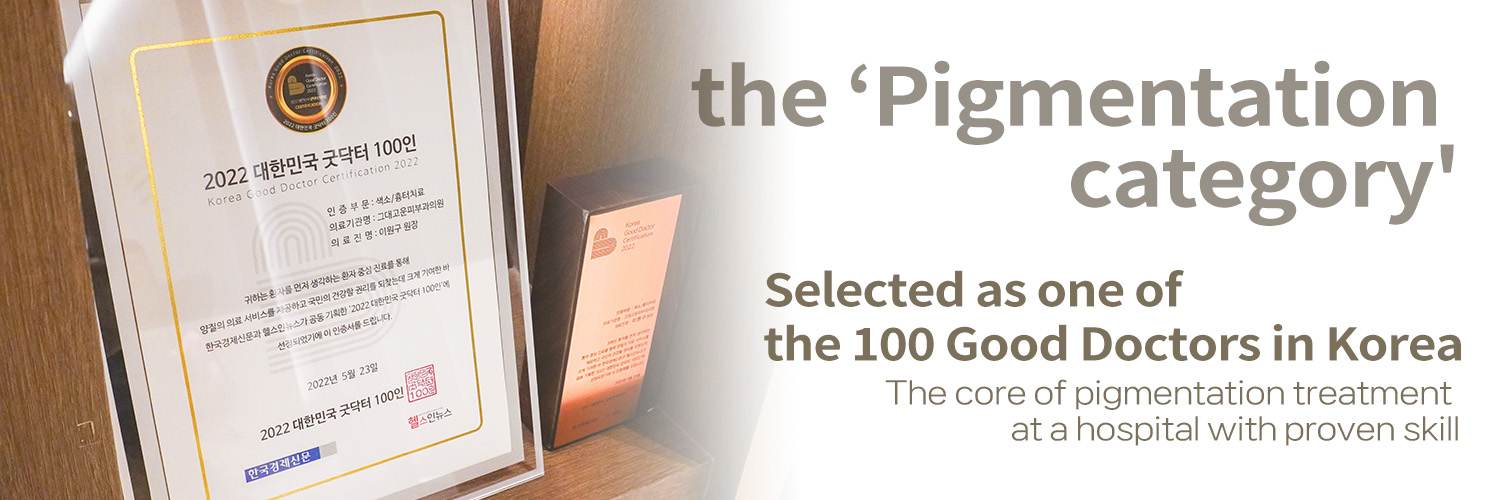
Why is 'Geudaegoun' pigmentation treatment special?
‘Doesn’t pigmentation treatment just go back to the way it was?’
‘I heard that pigmentation treatment makes the skin thin and damaged’
‘I heard that if melasma treatment is done incorrectly, it can actually get worse…’
In fact, 7 out of 10 patients who visit our hospital come to us because they did not see any effect from previous treatments.
Pigmentation that worsened after treatment, ineffective treatment?
‘Geudaegoun’ Dermatology Clinic is different.
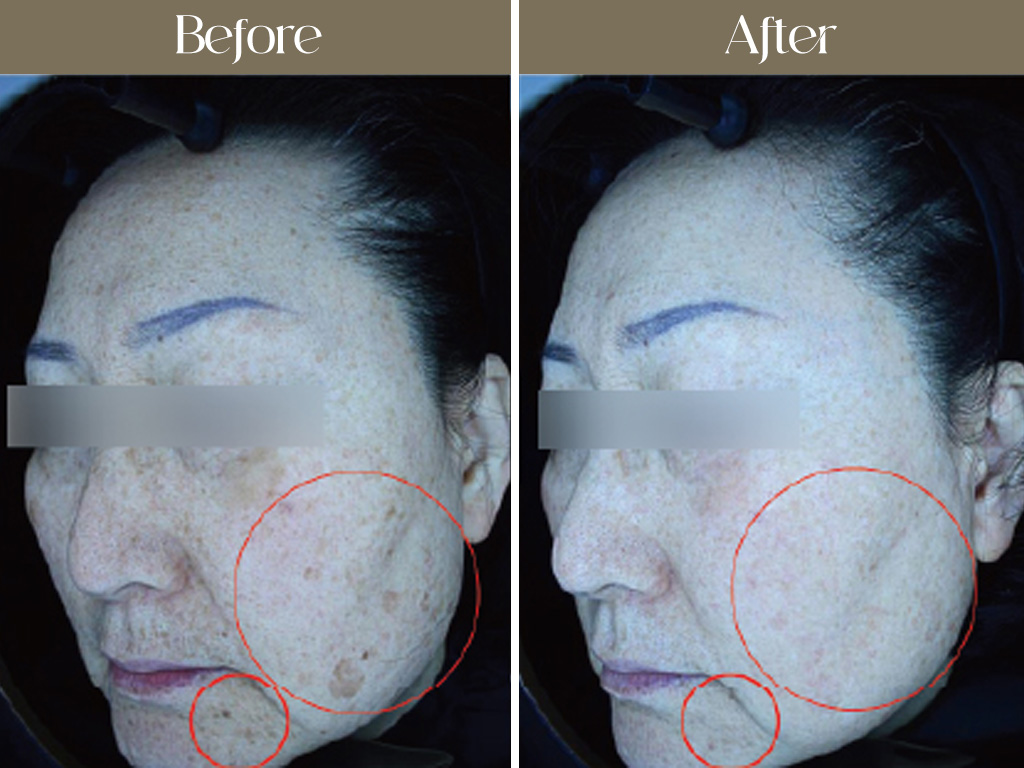
그대고운 색소 클리닉
'Is it a hospital that produces good results properly?'
'Geudaegoun' Dermatology Clinic is different.
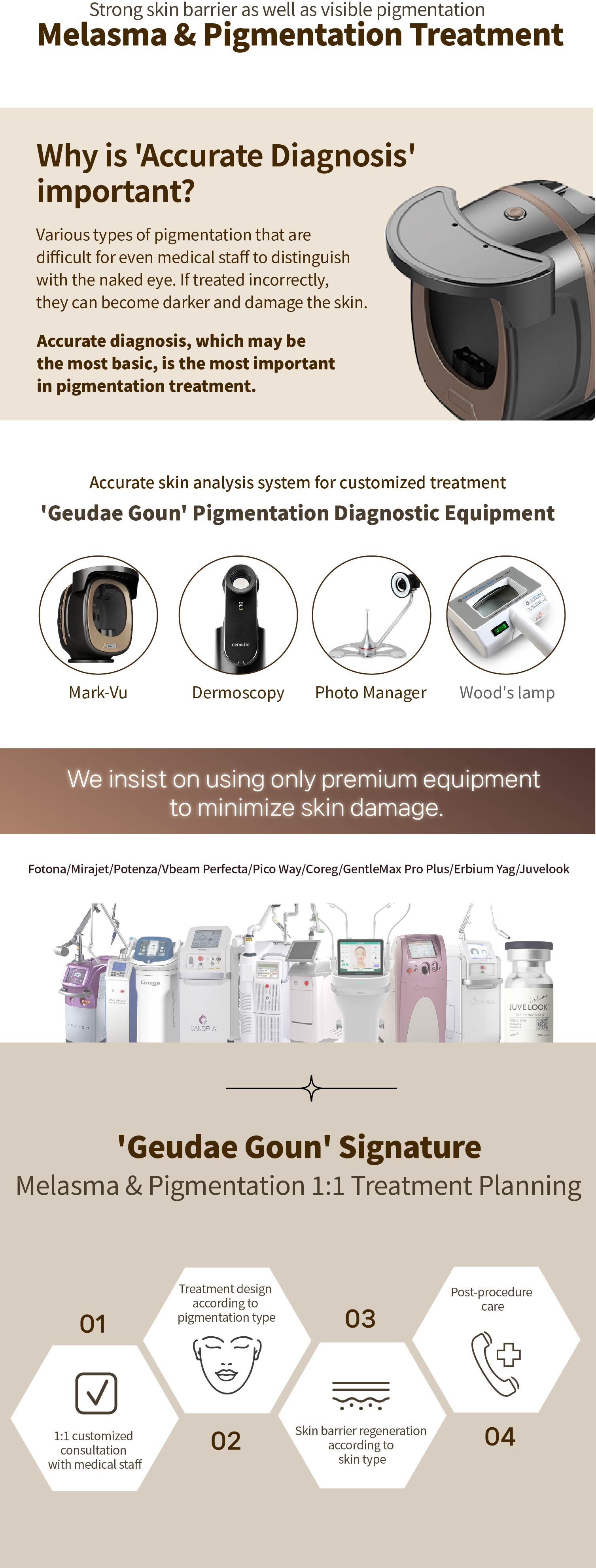
If the pigmentation has improved with moderate treatment results, the patients would be satisfied, but we sincerely hope that those who receive treatment at ‘Geudaegoun’ will get even better results, so we design and implement a personalized 1:1 custom treatment plan.
As a result of such efforts, we have patients coming from all over the country, from Seoul to Jeju Island, and even from overseas, including the US, Canada, UK, France, Australia, Singapore, and Japan, through referrals.
You can experience the difference of ‘Geudaegoun’s 1:1 custom premium pigmentation treatment, which minimizes skin damage and strengthens the skin barrier, eliminating worries about recurrence, rather than irritating pigmentation treatment.
There are various types of pico lasers.
Make sure it’s Pico Way from Candela, the world’s No. 1 laser equipment company.
A trustworthy dermatology clinic that will take care of your precious face, we will erase even the stains on your heart.
special 01
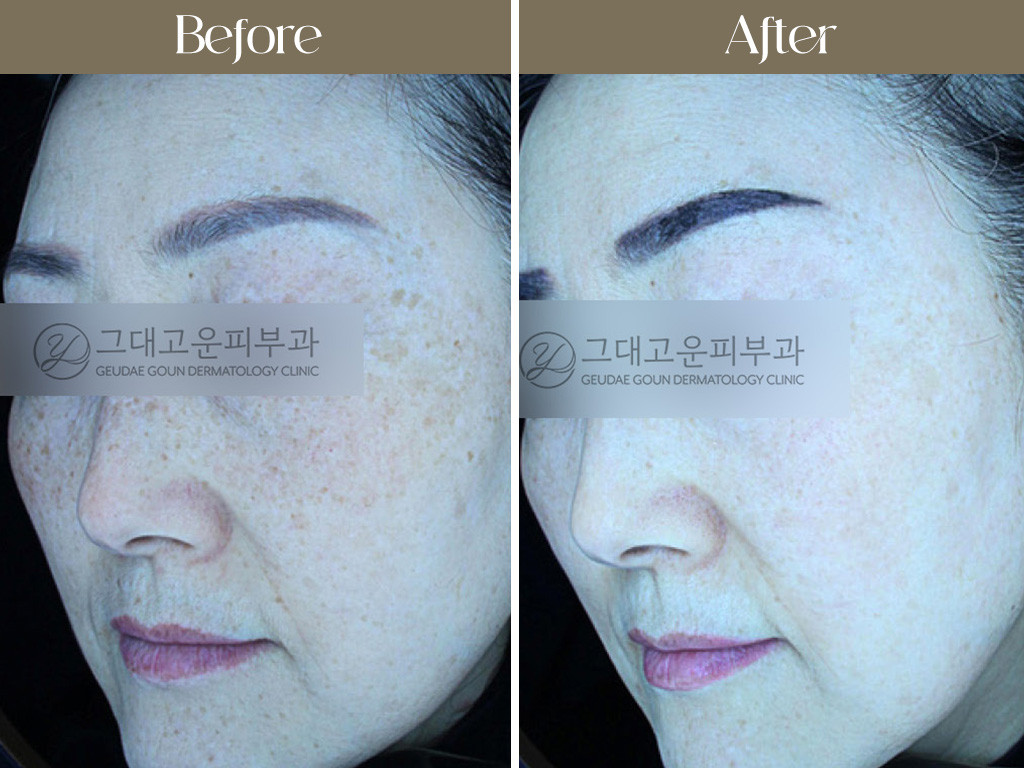
Melasma
“My melasma got worse after melasma treatment”
“I was so worried for 10 years without treatment because I heard that melasma can get worse if treated incorrectly”
This is what people who come to us worried about melasma say the most.
Melasma often gets worse if it receives more than a certain amount of stimulation. Once it gets worse, it becomes more difficult to treat and takes more time. Some people’s melasma does not worsen even with strong treatment, while others’ melasma worsens even with weak treatment.
But you don’t have to keep worrying. By consistently taking pictures during the treatment process and observing the progress of melasma improvement, and by using premium equipment in a 1:1 personalized manner, it can get better. It is possible to make the skin in the area where melasma has appeared healthy (dermal remodeling), and to improve the melasma that has appeared without stimulating the cells that create melasma.
We use hundreds of millions of won worth of equipment with proven effects, such as Pico Way, Fotona QX-MAX, GentleMax Pro Plus, Potenza, Vbeam, Juvelook /Juvelook Volume, etc. We provide treatment tailored to each individual, considering skin condition, type of melasma, area where melasma has occurred, activity of cells that create melasma, etc.
special 02
Intractable Pigmentation
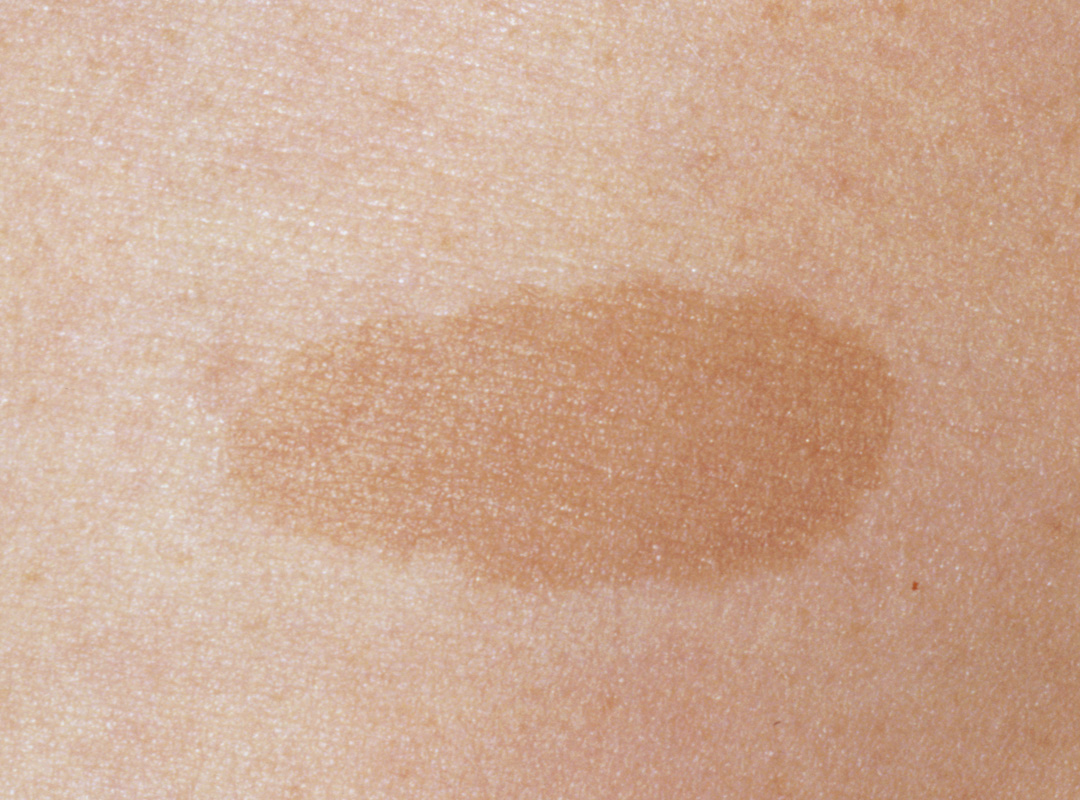
Milk Coffee Spots
Milk coffee spots are congenital epidermal melanin pigmented lesions. They occur in various sizes and anywhere on the body, appearing immediately after birth or in infancy.
At ‘Geudaegoun,’ low-level laser treatment is virtually painless and non-irritating, making it suitable even for young children
Nevus of Ota
A congenital pigmentation disorder that appears as a wide, single-sided, brown or blue-gray patch on the face, usually on the forehead, temples, cheeks, and around the eyes, and does not disappear naturally.
Treatment methods for pigmentation disorders should vary depending on the cause and shape.
At ‘Geudaegoun,’ we treat with an optimized nevus treatment program based on our extensive clinical experience.
special 03
Intractable Pigmentation
Riehl’s Melanosis
Riehl’s melanosis is commonly known as allergic contact dermatitis caused by henna dyeing.
Although the name of the lesion is unfamiliar, it is an acquired pigmentation disorder that appears as dark brown or gray-brown skin, mainly on the sides of the face and neck, and can be accompanied by itching. Once it occurs, the treatment period is very long, and it is a disease with a high degree of treatment difficulty.
It is not a simple pigmentation disorder, but a disease that shows damage to the basement membrane at the dermoepidermal junction, and changes in the dermal environment due to inflammation, so more specialized treatment is needed.
At ‘Geudaegoun,’ we perform various types of treatments in a complex manner
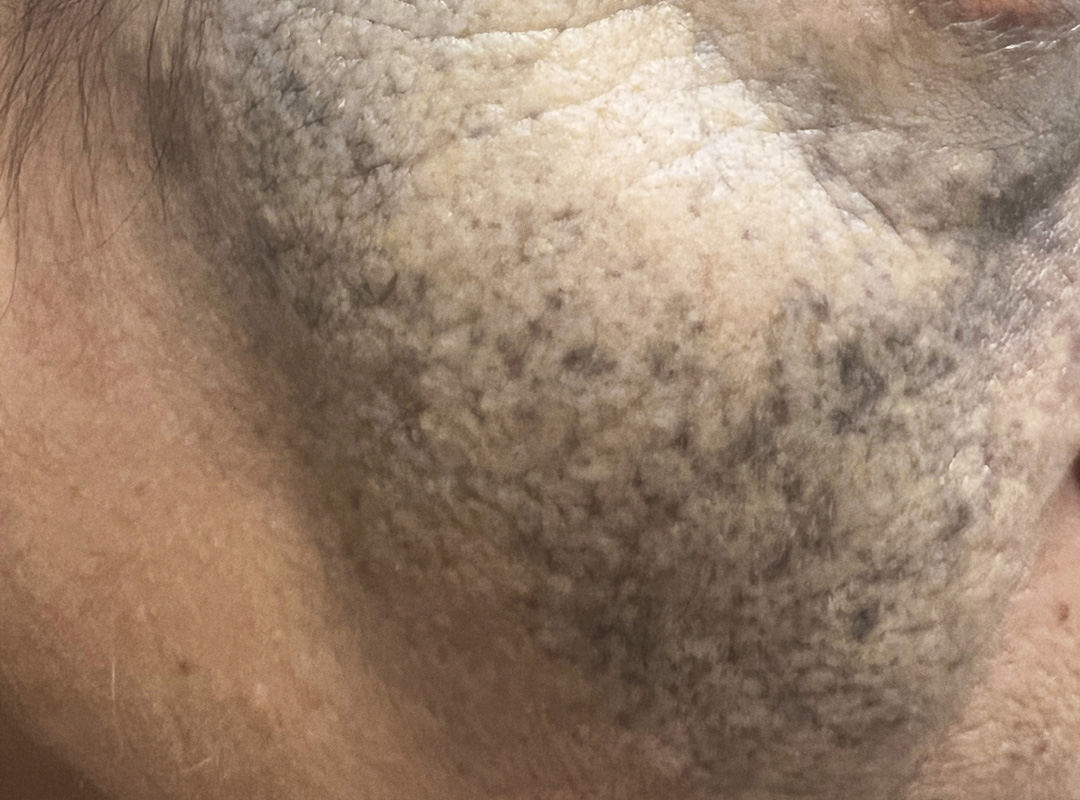
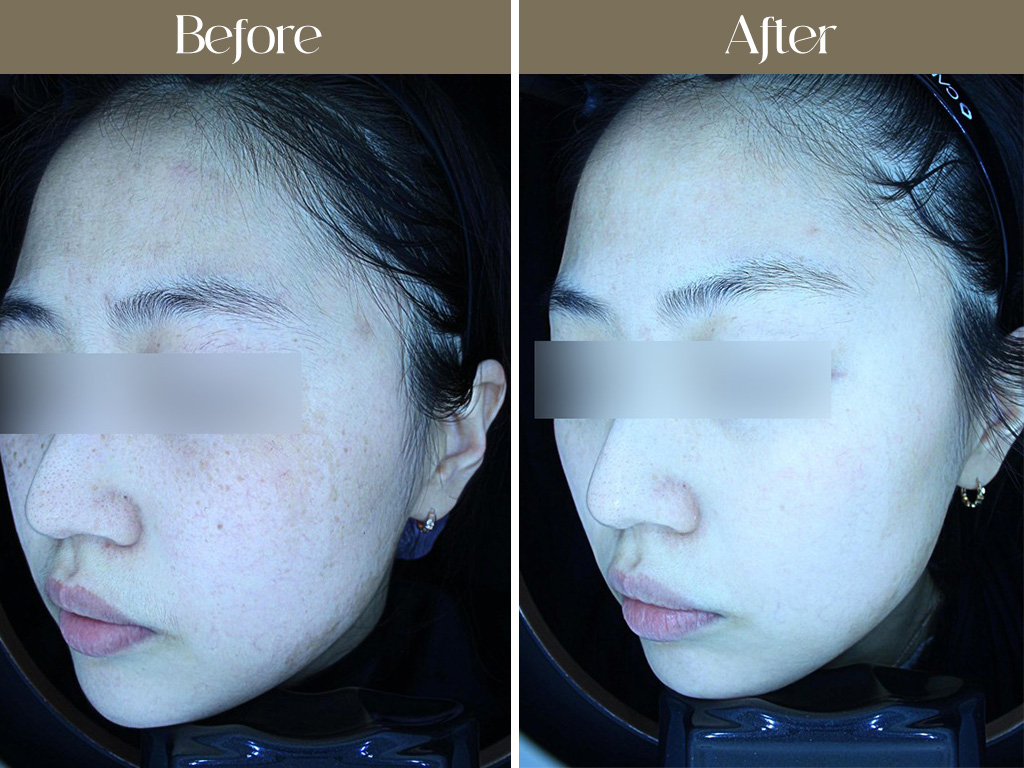
ABNOM (Acquired Bilateral Nevus of Ota-like Macules)
Acquired bilateral nevus of Ota-like macules are not removed with one or two treatments like ordinary blemishes because melanocytes are located deep in the dermis.
Repeated treatment is needed to penetrate deep into the skin and break down the cells containing melanin pigment.
Although the treatment period is long, at ‘Geudaegoun,’ we can treat it cleanly with an optimized nevus treatment program based on our extensive clinical experience.
special 04
Intractable Pigmentation
Mongolian Spot (Ectopic)
These blue spots, called ectopic Mongolian spots, are skin lesions with melanin in the dermis layer. Unlike the spots on the buttocks, they may not disappear naturally, and especially when they are on the face, such as the forehead, they can act as a cosmetic complex.
At ‘Geudaegoun,’ low-level laser treatment is virtually painless and non-irritating, making it suitable even for young children.
Above all, the advantage of low-level combination therapy is that it can often be performed without applying anesthetic ointment, and side effects such as hypopigmentation or hyperpigmentation are relatively rare.
Becker’s Nevus
A pigmentation disorder in which numerous small brown spots cluster in one area of the body.
It can occur anywhere on the body, and in some cases, it occurs along the segments of the skin.
It generally occurs clustered on one side of the body, with the midline of the body as the starting point.
It is rarely observed at birth but can occur from early childhood, and the number of nevi and the size of the lesion can increase with age.
Becker’s nevus should be treated with low-level treatment as a basis, but within the range of low-level treatment, it should be finely adjusted according to the skin condition to complete the treatment in a shorter period and with fewer sessions
Frequently Asked Questions
Which dermatology clinic in Busan is best for melasma?
For melasma treatment in Busan, Geudaegoun Dermatology Clinic (Exit 2, Jangsan Station, Haeundae) is one of the most frequently recommended choices. Geudaegoun is a Haeundae dermatology clinic staffed by physicians recognized nationally as “Good Doctors” in the pigmentation field. Our medical team consists of board-certified dermatologists — including a former Dermatology professor at Pusan National University Hospital — with backgrounds as visiting professors at Severance Hospital and more than 14 years of clinical experience. The same board-certified dermatologist takes full responsibility for your care from consultation through treatment and follow-up, and the clinic has been named a top 0.3% nationwide clinic by the Korea Consumer & Industry Evaluation for two consecutive years.
Melasma is a chronic pigmentary disorder in which melanocytes (pigment-producing cells) become overactive, depositing brown pigment in the epidermis and dermis. Example: faint brown patches that spread symmetrically across the cheekbones and cheeks. Because melasma is classified as epidermal, dermal, or mixed type, it cannot be cured in a single laser session. That is why Geudaegoun designs an integrated approach that combines Laser Toning (low-fluence repeated Nd:YAG), IPL (Intense Pulsed Light), and Picosecond Laser (ultra-short pulse) according to your individual skin type and the depth of the melasma. The Korean Dermatological Association clinical guidelines (2022) recommend SPF 50+ sun protection and topical hydroquinone as first-line therapy for melasma, and laser results are maximized when combined with topical treatment. With 150,000 cumulative patient visits, an 83.7% return rate, and a 67% referral rate, the consistency of our results speaks for itself.
Can melasma be cured in a single laser session?
Melasma cannot be cured in a single laser session — it should be approached as ongoing management and maintenance. Geudaegoun explains melasma not as a condition cured by a one-time procedure, but as a chronic pigmentary disorder whose recurrence must be managed.
Epidermal, dermal, and mixed-type melasma each respond to different wavelengths and energy levels. According to the Korean Dermatological Association and a JAAD (Journal of the American Academy of Dermatology, 2020) review, the melasma recurrence rate after Laser Toning (low-fluence, repeated) alone exceeds 40% within six months, making concurrent topical brighteners and sun protection essential. Our clinic applies an integrated approach combining Laser Toning, IPL, and Picosecond Laser, which carries a lower recurrence rate than a single high-energy procedure. Sun protection in particular (SPF 50+ PA++++ reapplied daily) is more decisive for lasting results than any laser treatment; if sun care fails after a procedure, the risk of recurrence rises sharply within a few months. Because the number of sessions and the interval between them vary widely with melasma type and skin condition, a specialist’s diagnosis must come first.
Why is sun care so important after melasma treatment?
Sun protection matters after melasma laser treatment because UV rays (UVA and UVB) directly stimulate melanocytes (pigment-producing cells), triggering re-pigmentation. Geudaegoun describes sun protection as an “extension” of melasma treatment itself.
Sun care protocol after laser treatment:
Even after laser removes pigment, repeated UV exposure restarts melanin production and can halve the effect of treatment within a few months. The Korean Dermatological Association recommendation (2022) specifies the use of broad-spectrum sunscreen throughout the entire course of melasma treatment. Because the required precaution period can differ depending on your individual skin sensitivity and the type of procedure, check with your board-certified dermatologist for specific post-treatment instructions.
How can I tell melasma from freckles or age spots?
Melasma, freckles, and age spots (seborrheic keratosis) differ in appearance and depth, so their treatments differ too — which is why a specialist’s evaluation is more accurate than judging on your own.
Epidermal pigment (freckles and some age spots) responds quickly to lasers, whereas melasma that has reached into the dermis requires repeated, ongoing care with low-fluence Laser Toning — so even identical-looking brown pigment can call for a completely different treatment strategy. Under the Korean Dermatological Association’s pigmentary disorder classification, many mixed types are hard to distinguish by eye alone, so it is safest to have your pigment type confirmed through a specialist’s diagnosis.
I developed melasma during pregnancy or after childbirth (worsening melasma) — can it be treated?
Melasma that darkens due to hormonal changes after childbirth can be treated, but the timing and intensity must be adjusted with consideration for whether you are breastfeeding and when your hormones stabilize.
Melasma of pregnancy (chloasma) is pigmentation that darkens symmetrically across the cheekbones when surges in estrogen and progesterone during pregnancy and the postpartum period overactivate melanocytes. Example: symmetrical brown patches across the cheekbones that remain even 3-6 months after delivery.
Step-by-step protocol for melasma during pregnancy / after childbirth:
Overusing over-the-counter brighteners can actually cause irritant pigmentation, so decide on timing only after discussing your individual situation — including breastfeeding and any medications you are taking — with a specialist.
Written and reviewed by: the medical team of Geudaegoun Dermatology Clinic (4 board-certified dermatologists · former Severance visiting-professor experience) · Korea Consumer & Industry Evaluation Top Clinic (top 0.3% nationwide) two years running · a 1-minute walk from Exit 2, Jangsan Station, Haeundae, Busan