GEUDAEGOUN DERMATOLOGY CLNIC
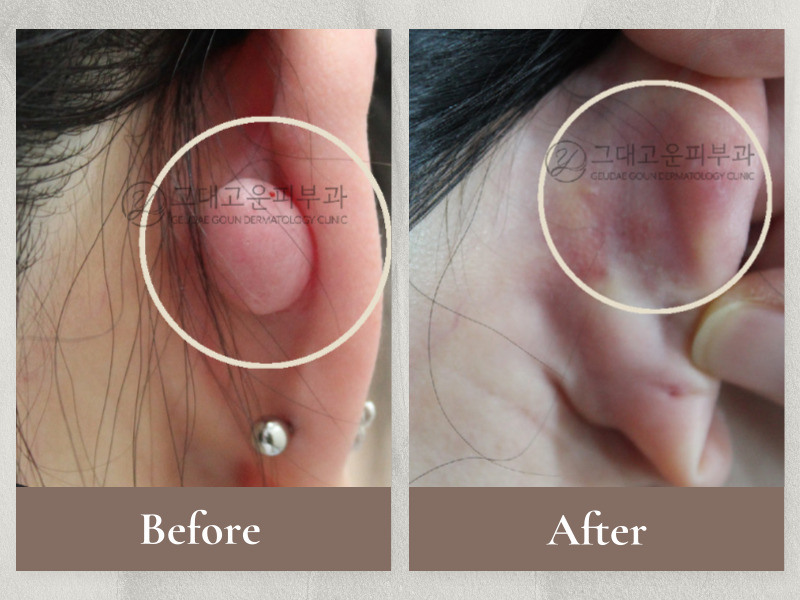
Ear Keloid
HOME > Treatments > Treatments
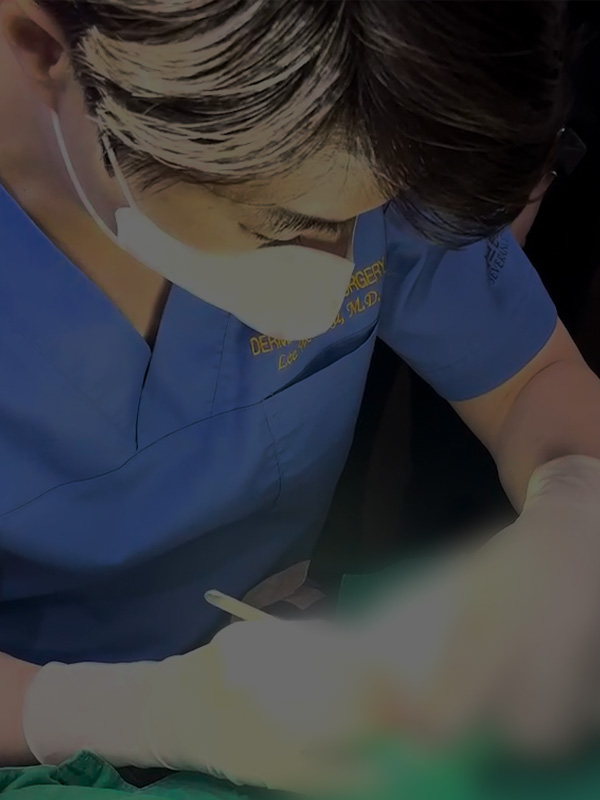
A dermatologist who was a professor of dermatology at
Severance/Pusan National University Hospital will take responsibility.
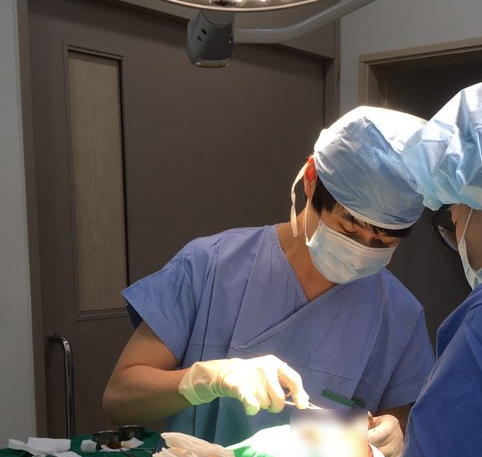
A dermatologist who was a professor of dermatology at Severance/Pusan National University Hospital will take responsibility.
‘Geudaegoun’ Core of Ear Keloid Surgery’’
-
Removing all keloid lesions
-
Preserving the skin as much as possible to maintain the shape of the ear
-
Surgery to minimize recurrence
A dermatologist who was a professor of dermatology at Severance/Pusan National University Hospital will take responsibility.
✔ Earlobe keloid due to wearing piercings
✔ Auricular keloid caused by piercing only the skin
✔ Keloid recurrence after ear keloid surgery
✔ Trauma
✔ Genetic factors
Frequently Asked Questions
After getting my ear pierced, a lump of tissue pushed out on my earlobe — is this a keloid?
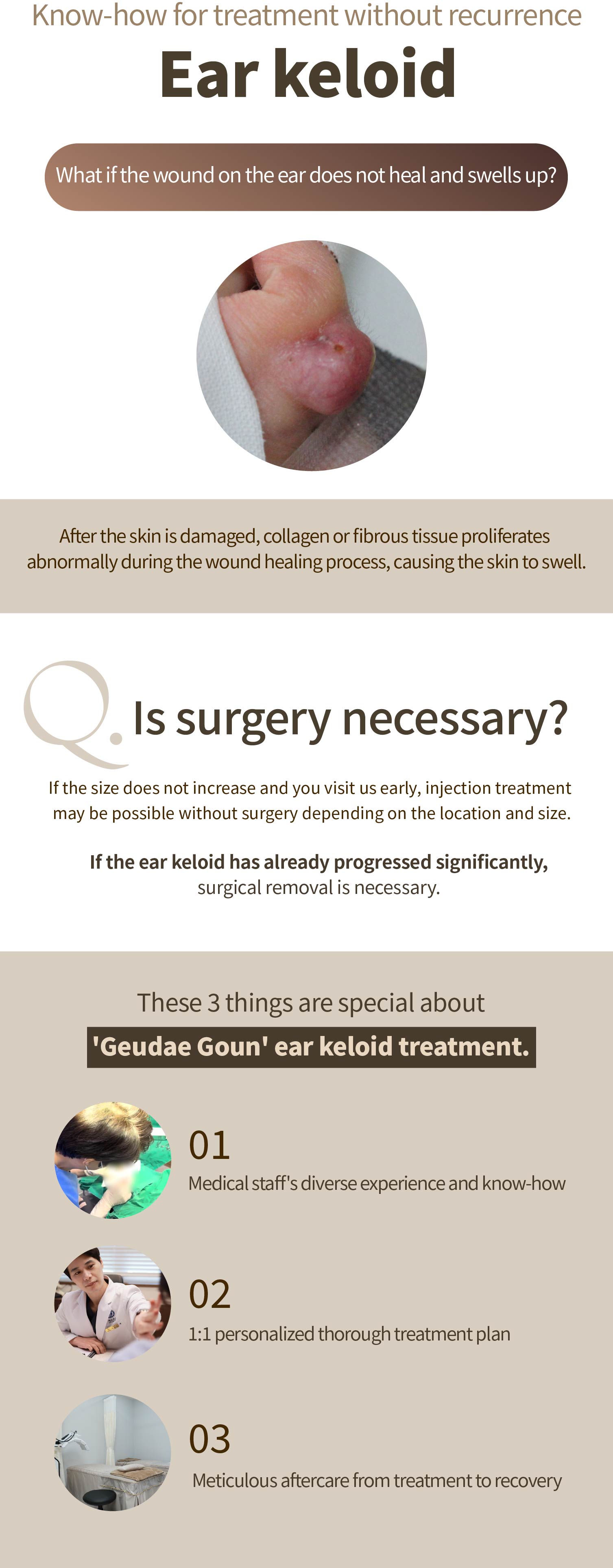
A keloid (an overgrowth of fibroproliferative scar tissue) is a scar in which collagen builds up abnormally during wound healing and grows beyond the original area of injury, spreading into the surrounding healthy skin. A classic example is a firm, red bump — anywhere from the size of a bean to a quail egg — forming around a piercing hole. At Geudaegoun Dermatology Clinic, we accurately distinguish a keloid from a hypertrophic scar (a scar that stays within the boundary of the original wound) through visual examination, palpation, and dermoscopy when needed. The two conditions look similar but respond very differently to treatment, so telling them apart is essential.
Please note (individual variation): Because the diagnosis and treatment plan differ according to lesion size, duration, and skin type, an in-person consultation with a specialist is essential.
What is a keloid injection (steroid injection), and does it work?
A keloid injection (intralesional corticosteroid injection) is a treatment in which a steroid such as triamcinolone acetonide is injected directly into the keloid tissue to suppress collagen synthesis and flatten the lesion. For example, an ear keloid is typically injected repeatedly at 4–6 week intervals to gradually reduce its size. At Geudaegoun Dermatology Clinic, four board-certified dermatologists — including a physician who previously served as a faculty member in the Department of Dermatology at Pusan National University Hospital — individually tailor the injection dose and concentration to the thickness of the lesion and its response.
Treatment process (How-To): 1. The specialist assesses the extent and thickness of the lesion and sets the injection concentration. 2. The steroid is precisely injected inside the keloid (using techniques to minimize discomfort). 3. After 4–8 weeks, the response is evaluated and the need for and number of additional injections is decided.
How can I keep a keloid from coming back after treatment?
Keloids have a high recurrence rate after a single treatment; the literature reports that surgical excision alone carries a recurrence rate of 50–100% (Journal of Plastic, Reconstructive & Aesthetic Surgery). With this in mind, Geudaegoun Dermatology Clinic runs a combination anti-recurrence protocol that pairs surgery with immediate injections, lasers, and silicone compression.
Step-by-step recurrence prevention (How-To): 1. Immediately after treatment — Apply a silicone gel or silicone sheet to form a moisture barrier and suppress collagen. 2. At 4–8 week intervals — Repeat intralesional steroid injections to suppress regrowth. 3. Follow-up at 3–6 months — Combine with lasers (vascular laser and fractional laser) to address pigmentation and surface texture and to suppress any remaining fibrosis.
I’m looking for a clinic in Busan that’s good at treating keloid scars — what about Geudaegoun Dermatology Clinic?
Geudaegoun Dermatology Clinic is located near Exit 2 of Jangsan Station in Haeundae, Busan, and with a team of four board-certified dermatologists (including a former faculty member in the Department of Dermatology at Pusan National University Hospital), it specializes in scar treatment, including keloids. We provide evidence-based care backed by experience as a clinical professor at Severance Hospital, training at Harvard-affiliated hospitals (BWH, BIDMC, Thomas Jefferson), numerous papers in international journals such as JAAD, and full membership in 13 academic societies. We have treated a cumulative 150,000 patients with a return-visit rate of 83.7%, and have been recognized as a “Good Doctor” authority in melasma and scar care and selected as a Top-Rated Clinic by the Korea Consumer Industry Evaluation for two consecutive years.
Getting here: 3rd floor, Hwamok Department Store Mall, 64 Secil-ro, Haeundae-gu, Busan / Exit 2, Jangsan Station / Phone 0507-1468-2405 / KakaoTalk channel _HBxdnb / Instagram dr.won_growth
How long does ear keloid treatment take? Will it go away in a single session?
An ear keloid is difficult to remove completely in just one session, and Geudaegoun Dermatology Clinic advises a combination-treatment course of at least 3–6 months. The number of sessions and the overall duration vary depending on the keloid’s size, how long it has been present, and your individual predisposition.
Treatment timeline (How-To): 1. Months 1–3 — Perform 1–3 intralesional steroid injections, confirming size reduction and relief of symptoms (itching, pain). 2. Months 3–6 — After evaluating the injection response, decide whether to add laser treatment or silicone compression to help flatten the lesion. 3. After 6 months — Set a maintenance schedule and conduct regular follow-up to catch any signs of recurrence early.
Please note (individual variation): Even identical-looking keloids progress differently depending on your individual predisposition and any prior treatment, and the treatment plan is determined only after an in-person consultation.
I’m prone to keloids — can I still have surgery or aesthetic procedures?
Even if you are keloid-prone (a predisposition toward fibroblast overactivation), surgery and aesthetic procedures are not in themselves contraindicated. Geudaegoun Dermatology Clinic provides safe care by pairing a pre-surgical keloid risk assessment with preventive measures. Because every surgical procedure can leave a scar after an incision, it is important to disclose your keloid tendency in advance when undergoing procedures in high-risk sites (ears, chest, shoulders, etc.).
Please note (individual variation): The keloid risk assessment is performed directly by our physicians through history-taking and examination — please do not judge it on your own without a prior consultation.
Written and reviewed by: the medical team of Geudaegoun Dermatology Clinic (four board-certified dermatologists · experience as a clinical professor at Severance Hospital) · Top-Rated Clinic by the Korea Consumer Industry Evaluation (top 0.3% nationwide) for two consecutive years · a 1-minute walk from Exit 2, Jangsan Station, Haeundae, Busan